The 25th annual Animal Law Conference brought together legal professionals, law students, advocates, and nonprofit leaders from across the country for a weekend of education, reflection, and collaboration focused on advancing protections for animals through law, policy, and culture.
Dates & Location
October 13–15, 2017
Hilton Portland Downtown
Portland, Oregon
Hybrid format (in-person + virtual)
Registration
Total registrants: 391
(in-person and virtual)
Legal Professionals: 82
Students: 184
Nonprofit/Public Interest: 85
Animal Activists: 40
Our Sponsors
Highlights & Reflections
The 2017 conference took place October 13–15 at the Hilton Portland Downtown in Portland, Oregon, welcoming over 390 registrants. This milestone year offered a unique opportunity to honor the history of the animal law movement while exploring current challenges and future directions.
The weekend began with a vibrant Friday evening welcome reception and keynote. Pamela Frasch and Joyce Tischler delivered a memorable retrospective, “25 Years of the Animal Law Conference,” sharing stories, successes, and lessons from the evolution of the animal law movement. Their presentation blended insight, humor, and archival photos from decades of animal advocacy, celebrating the progress made and inspiring continued action.
Saturday’s sessions examined critical issues affecting farmed animals and broader advocacy efforts. Panels included “Not Your Average Factory Farmed Animal Panel: Fixing a Fouled-Up System” on industrial agriculture’s impacts, and “Can Animals Be Victims of Crime?” exploring how legal frameworks can expand protections to sentient beings. Attendees also engaged with sessions on diversity and inclusion in the animal protection movement, the role of animal sanctuaries, and emerging approaches to humane and plant-based alternatives to industrial farming.
Saturday evening featured a banquet dinner and keynote presentation by biologist and author Jonathan Balcombe, who discussed What A Fish Knows. Through his illustrated talk, Balcombe revealed the surprising cognitive and social capabilities of fishes, challenging common perceptions and highlighting the importance of legal and ethical consideration for aquatic animals. The evening concluded with a book signing, allowing attendees to engage with Balcombe’s work personally.
Sunday programming focused on ethics, international developments, and recent legal advancements. Russ Mead led an ethics CLE session exploring challenging dilemmas in animal law practice. Other panels covered the global expansion of animal law, the emerging field of aquatic animal law, recent litigation victories, and the evolving policy landscape under the new federal administration. The conference concluded with reflections from Pamela Frasch and Joyce Tischler, emphasizing the continued need for collaboration, advocacy, and innovation to protect animals through law.
The 25th annual Animal Law Conference celebrated a quarter-century of progress while inspiring attendees to advance animal protection through continued dedication, strategy, and community.
For those unable to attend, recordings of the sessions are available to experience the ideas, insights, and inspiration shared throughout this landmark anniversary conference.
2017 Photo Album
Friday
Welcome Reception
The conference will kick off with an evening reception and keynote at the Hilton Portland Downtown. We invite you to enjoy appetizers and drinks while networking with fellow conference attendees.
921 SW 6th Avenue, Portland, OR 97204
Welcomes & Introductions
Keynote: 25 Years of the Animal Law Conference
There is a reason Joyce Tischler is commonly referred to as “The Mother of Animal Law.” She has been a visionary leader in the field for over 40 years, working on everything from cutting edge legislation to groundbreaking litigation. Without Joyce’s ideas, creativity, passion, and energy, one could argue there would be no animal law movement today. Pamela Frasch first met Joyce in 1989, and they have enjoyed working together ever since. As the creator of the Criminal Justice Program at Animal Legal Defense Fund, founder of the Center for Animal Law Studies at Lewis & Clark, and the first and only dean of animal law, Pam has been at the forefront of many of the most important advances for animals. Together, they have decades of experience and perspective about the origins and history of animal law and animal law education.
Please join them for an inspiring, poignant, and at times hilarious, retrospective of the animal law conference, the many successes and failures of the movement, and why it’s more important than ever to do this work. Note: There’s a rumor that photos and film from “the olden days” might be involved, so be prepared for your senses to be assaulted by fabulous 70s and 80s fashion choices…
Introductions by: Maral Cavner & Ashlyn Whitbeck, Student Animal Legal Defense Fund Co-Directors, Lewis & Clark Law School
Final comments by: Megan Amos, Student Animal Legal Defense Fund Pro Bono Chair, Lewis & Clark Law School
Saturday
Not Your Average Factory Farmed Animal Panel: Fixing a Fouled-Up System
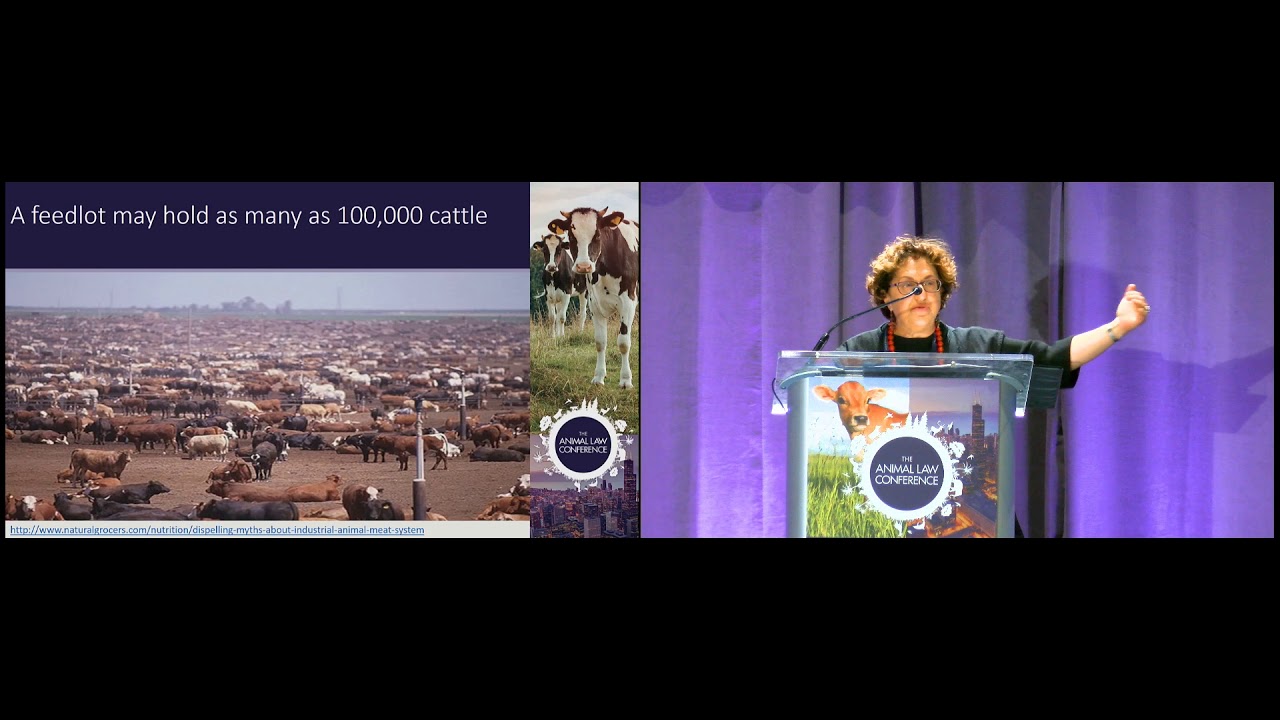
Factory farming negatively impacts not only the animals who are exploited, but also nearby communities, farm workers, food safety, and the environment. Let’s explore the big picture and the latest efforts to respond to this crisis.
Break
Can Animals Be Victims of Crime?
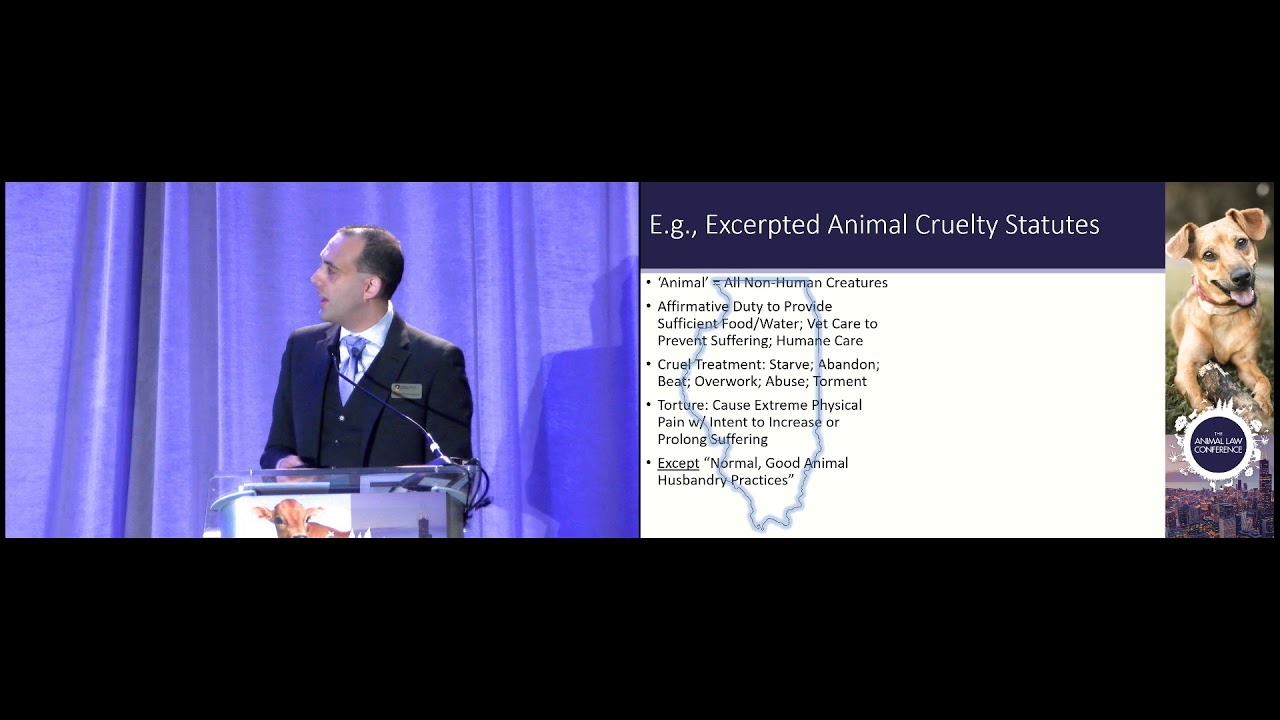
Animal cruelty prosecutions are expanding in number and scope. This creates opportunities to broaden who society considers to be worthy of meaningful protections, including those that flow to traditional victims in the legal system. Is the capacity to suffer enough to redefine what it means to be a victim? Join this panel as they imagine a world where all sentient beings are entitled to greater protection under the law.
Lunch
Gender and Race Redux: Identifying and Fixing the Racist and Sexist Realities of the Animal Protection Movement
Left unaddressed, systemic racism and sexism corrupts the animal protection movement. This panel is a call for broad based internal reflection, hard questions, and real solutions. If we care about animals, shouldn’t we be equally compassionate toward human animals? The presenters will delve into the problem and explore next steps.
Break
Animal Sanctuaries - More Than Just a Place to Live
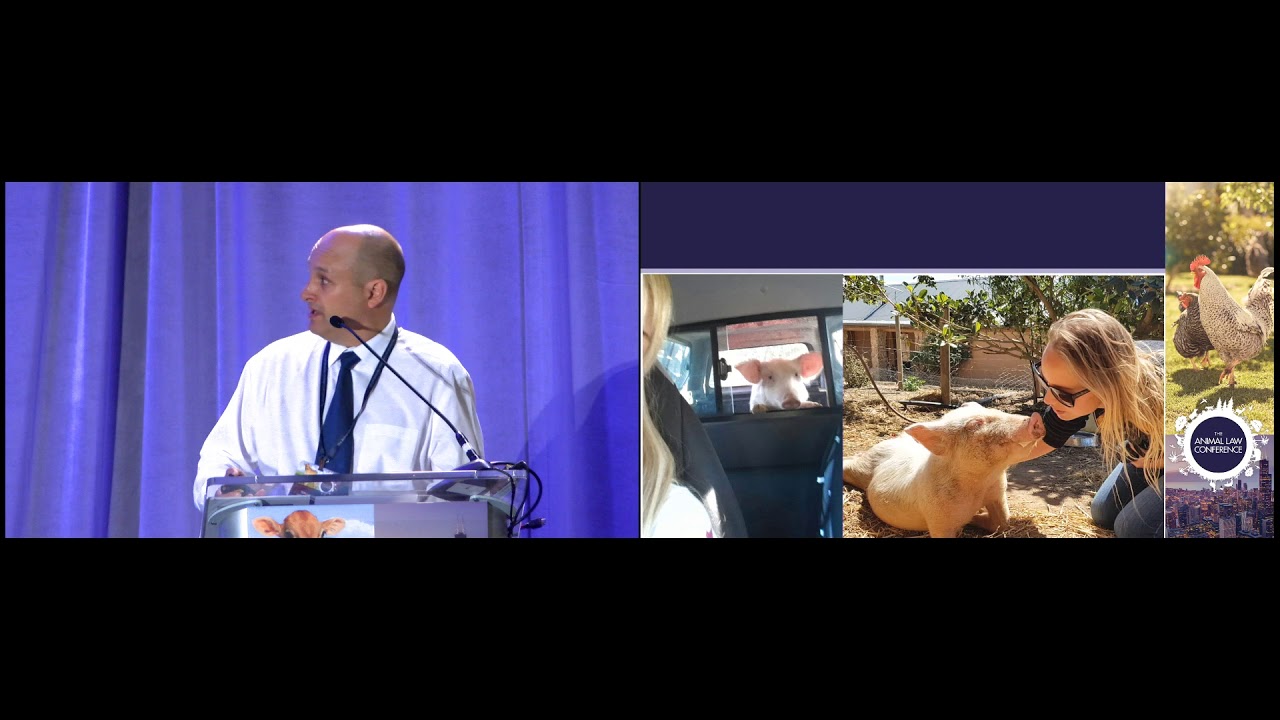
Attorneys working to get animals out of harm’s way often face difficulty finding places for those animals to live out the rest of their lives with dignity and respect. Animal sanctuaries address a crucial need, giving animals a place to live a more natural life. However, they play an equally important, but less recognized role in education, law, public policy, and rehabilitation, among others. This session will provide insights about the complex role of animal sanctuaries, and the vital nature of their work in developing principles of animal protection.
Break
Cocktail Reception
Banquet Dinner and Keynote Presentation
Banquet Dinner
Keynote Presentation: What A Fish Knows
In this dynamic, richly illustrated presentation based on his New York Times best-selling book What A Fish Knows, ethologist Jonathan Balcombe takes us under the sea, through streams and estuaries, and to the other side of the aquarium glass to reveal the surprising capabilities of fishes. Although they exceed thirty thousand species―more than all mammals, birds, reptiles, and amphibians combined―fishes are rarely considered by us to be individuals with thoughts, feelings, and experiences. Combining science with stories and the author’s own personal experiences, Balcombe upends our common biases toward fishes as primitive and dull, showing them instead to be sentient, aware, social, and even Machiavellian. Books will be available for signing after the presentation.
Introduction by: Kathy Hessler, Clinical Professor of Law and Animal Law Clinic Director, Lewis & Clark Law School
Book Signing
Sunday
Do-Goodery Animal Lawyering: Why the Rules of Ethics Still Apply to You!
Start the morning with an inspiring and interactive seminar exploring some of the most challenging ethical dilemmas animal law attorneys face in both practice and volunteer positions. Animal law ethics expert Russ Mead will lead attendees through a series of hypotheticals, examining difficult scenarios and how to handle them effectively while adhering to the Model Code of Professional Responsibility. All this for one hour of Ethics CLE credit.
Break
Animal Law Meets World: The Global Expansion of Animal Law
Tier, Kafshë, Dýr, Zwierzẹ: whichever language you speak, the word “animal” is the subject of a growing body of law. Animal law experts around the globe are exploring the issues of import in their societies, and revolutionary developments are happening in Africa, Europe, and beyond. Attendees of this session will learn about specific initiatives aimed at building an awareness of animal law and legal education more inclusive of animal interests, as well as the ways in which legal practitioners have adapted their strategies in response to culture, society, and local communities.
Swimming Upstream: The Emergence of Aquatic Animal Law
It is hard for some people to connect with land animals like cows and chickens, and it can be even more difficult to feel empathy for aquatic animals, who live in a world that feels so foreign to us. Our lack of empathy leads to inadequate legal protection for animals who are harmed by captivity and fishing. We have seen an increase in empathy for some aquatic animals, such as whales and dolphins. Can we open hearts and minds and start to include fish in our circle of compassion too?
Break with Voodoo Doughnuts
Don’t Get Mad - Sue!! The Latest in Animal Law Litigation
A perennial favorite at the Animal Law Conference, we bring the most recent animal law developments to you. These presenters will critique precedent-setting state and federal animal law litigation that advocates need to know now.
Challenges and Opportunities for Animals under the New Administration and Current Congress
The new administration and current congress have introduced some radical shifts in federal and international policy. So, how will animals fare in the coming years? These seasoned political movers and shakers will give us the lay of the land.
Closing Remarks
Closing Remarks
Our conference panelists and keynote speakers submitted the following materials. The materials, although not necessarily written by the individual presenters, will be relevant to their panel topics and will be applicable to attorneys seeking CLE credits for attending the conference. We will not have binders or CD/DVDs of materials available for purchase at the conference, but attendees will be able to access this page via computer or our Digital Event Guide.
25 Years of the Animal Law Conference
- Frasch & Tischler PPT – ALC 2017
- The History of Animal Law, Part I (1972-1987)
- The History of Animal Law, Part II (1985-2011)
Not Your Average Factory Farmed Animal Panel: Fixing a Fouled-Up System
- Community Assn for Restoration of the Environment Inc v Cow Palace LLC
- Gulf Fishermens Association et al v. National Marine Fisheries Service et al
- Kimbrell PPT – ALC 2017
- Cow Save Anti-SLAPP Decision
- FDA FOIA En Banc Decision
- Idaho Ag-Gag Decision
- Utah Ag-Gag Decision
- Liebman PPT – ALC 2017
- Animal Welfare in the National Organic Program
- OTA Organic Suit Complaint
- McMillan PPT – ALC 2017
Can Animals Be Victims of Crime?
- Chiesa – Victimhood & Cruelty Statutes
- State v Nix
- Can Animals Be Victims of Crime PPT – ALC 2017
- Beloof – Crime Victim Rights & Animal Rights
- Fundamentals of Victims’ Rights: A Summary of 12 Common Victims’ Rights
- Lockwood & Arkow – The Link
- SAF-T Start-Up Manual 2015
- The Link Monograph
Gender and Race Redux: Identifying and Fixing the Racist and Sexist Realities of the Animal Protection Movement
- Humane Society Notches String of Big Wins Under Aggressive Leader
- Fearing PPT – ALC 2017
- Food Empowerment Project Blogs
- EEOC v. Catastrophe Management Solutions
- Employer’s ‘Concern’ for Alleged Rapist Revives Harassment
- Progress is Halting on Adding Women to Boards of Directors
- Wearing Deadlocks Doesn’t Support Race Bias Claim
- Walker PPT – ALC 2017
Animal Sanctuaries – More Than Just a Place to Live
- Unlikely Partners, Freeing Chimps From the Lab
- Why is this Chimp Smiling?
- Baeckler Davis PPT – ALC 2017
- Chicken Independence Day
- Despite What You Might Think, Chickens are Not Stupid
- Chai and Bamboo are Victims in a Failed Captivity System
- Galt Animal Activists Played Role in Bringing Down Circus
- Life Among the Elephants (and Bears, and Wolves, and Lions)
- No Ethical Way to Keep Elephants in Captivity
- PAWS Sanctuary Urges The Tonight Show to Stop Featuring Animals
- Stewart PPT – ALC 2017
What A Fish Knows
Do-Goodery Animal Lawyering: Why the Rules of Ethics Still Apply to You!
Animal Law Meets World: The Global Expansion of Animal Law
- Chinoda PPT – ALC 2017
- DiConcetto PPT – ALC 2017
- Animal Law – A Global Phenomenon
- Dolezal PPT – ALC 2017
Swimming Upstream: The Emergence of Aquatic Animal Law
- The Animal Welfare Act
- AWA as it relates to aquatic animals by DiConcetto & Rader
- Defining Animal Pain by Sneddon et al.
- Enrichment for laboratory-held fish by Williams et al.
- Which Aquatic Animals Should be Protected by Broom
- Hessler PPT – ALC 2017
- Humans Dolphins and Moral Inclusivity
- The Marine Mammal Captivity Issue
- Marino PPT – ALC 2017
Don’t Get Mad — Sue!! The Latest in Animal Law Litigation
- California Foie Gras Ruling
- CAFO Waste and CERCLA Ruling
- Missouri v California Hen Cage Standards Ruling
- Prison for Egg Executives in Salmonella Case
- Don’t Get Mad Sue PPT – ALC 2017
- 2017-7-7 Utah Ag-Gag MSJ Opinion
- Graham v. San Antonio Zoo Order Denying Zoo’s MSJ
- Hill v. Coggins – Fourth Circuit Opinion
- Petland Nationwide Class Action Complaint
- 173 Definitions
- 222102 Definitions
- Lolita MSJ (ECF 203)
- Lolita Opening Appellate Brief
Challenges and Opportunities for Animals under the New Administration and Current Congress
The conference has been approved for 9.75 Continuing Legal Education (CLE) general credits and 1.0 ethics credits by the Oregon State Bar for attorneys attending the conference in-person. Those registered to live stream the conference will be eligible for 9.25 general credits and 1.0 ethics credits (the Friday evening keynote presentation will not be available via the live stream).
The conference has also been approved for 9.5 CLE credits in Washington State for both attorneys attending in-person as well as those watching via live stream, including: 1 hour of ethics credit (for the following session: Do-Goodery Animal Lawyering), 2.75 hours of Law and Legal Procedure credits (for the following sessions: Can Animals Be Victims of Crime?, Don’t Get Mad-Sue!!, Challenges and Opportunities for Animals under the New Administration and Current Congress) and 5.75 hours of Other credits (for the following sessions: Not Your Average Factory Farmed Animal Panel, Gender and Race Redux, Animal Sanctuaries, Animal Law Meets World and Swimming Upstream). The keynote presentations were not approved for CLEs by the Washington State Bar Association.
Anyone seeking credit in other states should submit approval paperwork to their local bar association CLE boards or retain the certificate of attendance which we will be providing to attorneys who register for the conference, if their state has a reciprocal agreement with either of these states.
Please direct any questions relating to CLE credits to events@aldf.org.
Information via the American Bar Association (ABA) regarding CLEs.
Watch all sessions here
Playlist
1:06:25
58:35
1:40:32
1:30:33
1:31:44
54:39
1:00:51
1:14:33
57:44
1:00:54
1:05:20